Identify the part you want to hold
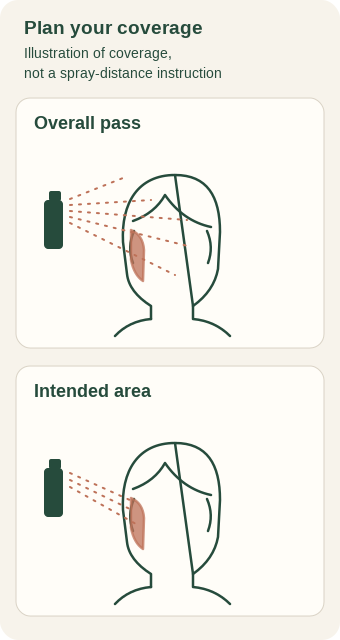
Arrange the section first. If only a small area moves out of place, plan an application to that area rather than coating the whole style again. If the whole shape relaxes, review the styling method as well as the finishing product.
Do not use additional hairspray to compensate automatically for a section that was never arranged into the shape you wanted. For curls that open after styling, start with why curls fall out.
For a styled curl set, decide the intended amount of separation before automatically adding another finish. Brushing out curls helps compare one cooled section with the remaining set. Follow the chosen spray's own sequence rather than assuming hairspray always belongs before or after every brush-out.
For a gel-based backward shape, slick-back styling owns distribution and arranging before the selected formula's setting stage. Hairspray is a separate possible finish, not an automatic correction for an uneven gel application. Check the actual product directions before adding another formula.
Follow the container’s application method
- Check whether the product is intended for dry hair or another starting state.
- Read the preparation instructions, spray distance and warnings on the actual container.
- Position the container at that distance and apply using the stated method.
- Allow the application to settle as directed before touching or reassessing it.
- Check the intended section before deciding whether to add product elsewhere.
For a named example, TRESemmé UK Extra Hold Hairspray 400ml describes application after styling dry hair, from about 25–30 centimetres away, using short bursts. Those details belong to that product and market; they are not a distance rule for every hairspray.
Keep spraying separate from appliance use
Read aerosol and container warnings, including restrictions around heat, ignition and eyes. Do not spray onto an appliance. A hairspray application method does not authorise using a heated tool over the resulting product layer.
If you intend to restyle with an appliance, check its instructions first. Review hair styling product order when another product or tool changes the sequence.
Review coverage before another pass
Inspect the front, sides and back separately, using a second mirror if that helps you see the intended area. Describe what has changed: a loose end, a moving side section or an overall shape that has relaxed. This gives your next application a specific purpose. If the area already looks and feels as you wanted, stop there rather than repeating a pass simply to complete a routine. Keep any later adjustment within the container’s instructions.
Table: swipe sideways on a small screen, or focus and use arrow keys.
| What you notice | What to check next |
|---|---|
| The same small area keeps moving | Whether that area received the intended application |
| Only the outside feels coated | Whether another overall pass would repeat that coverage |
| The shape was wrong before spraying | The arrangement and styling method |
| You want a different feel | The formula’s stated hold and finish, rather than another layer |