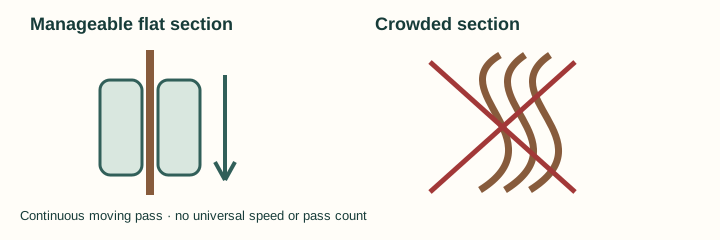
For a conventional dry-use flat iron, dry and detangle as its instructions require, isolate a manageable section, close the plates without extra force and keep one smooth moving pass. Do not apply this sequence to a wet-to-dry appliance.
Prepare and divide
- Confirm the exact tool permits conventional dry use and follow its product directions.
- Dry fully where required, detangle, and apply only compatible products according to their labels.
- Clip unworked hair away. Present a flat section rather than a round bundle wider than the usable plate contact.
- Set any selectable control from the maker's guidance; there is no universal hair-type temperature table.
Make the pass
Place the section so loose neighbouring hair cannot enter the hinge. Close the plates with the tool's normal mechanism, keep the section aligned, and travel smoothly toward the ends. Release clear of the tips. Do not pause to press harder, race over a catch, or repeat a snag with more heat.
| Observed sign | Inspect | Adjustment |
|---|---|---|
| Section bunches at plate edge | Breadth and alignment | Reset a smaller, flatter section. |
| Tool catches | Residue, damaged plate edge, hinge gap or tangled hair | Stop and inspect cold; do not add pressure. |
| Root access feels awkward | Body width and hand path | Start where you can keep the housing clear; do not force closer. |
| Movement becomes uneven | Cord, section and plate path | Reset the working area before another pass. |
The snagging guide owns mechanical inspection. The plate-width guide separates usable contact from outer body width. If the intended method is a turn-and-travel curl, use the flat-iron curl method instead.
The current US ghd Max straightening tutorial is the attributed example for sectioning and a moving straightening pass. Its model-specific product and finish claims are not universal evidence.
Compare one pass without prescribing a pass count
Use a test section where you can see the plates enter and leave. Note whether it stayed flat, the movement remained continuous and any hair escaped at an edge. Those observations are more useful than imposing a universal speed. If alignment fails, let the section settle and change its breadth or clipping plan before trying again; do not count repeated passes as a target.
Keep finished hair apart from unworked sections. Near shorter edge sections, reduce the amount of hair rather than forcing the housing closer than the model directions permit. If the cord or workspace pulls the tool off line, stop and rearrange the route while it rests on the documented surface.
Stop for a mechanical problem
A repeated catch at the same place on the tool calls for a cold inspection, not another hot pass. Follow maker cleaning directions for residue and stop using a tool with a damaged plate edge, hinge, housing or cord. Do not file an edge, force the hinge or add an unapproved coating. A catch that moves with the section may instead come from tangles or a crowded bundle. Record where the catch occurred before changing the section.