A bob is one of the easiest lengths to shape with a round brush because the hair is short enough to control but long enough to create a clear curve at the ends. The most reliable method is to dry the lower layers first, use a medium barrel that can grip the ends, and work on root lift separately from the shape through the length.
Test a smaller curve if a short layer or fringe cannot follow a broad barrel. For longer pieces and a looser end bend, test a broader curve only if the shortest working layer still reaches and releases. The size guide separates maker-defined core and outside-bristle measurements.
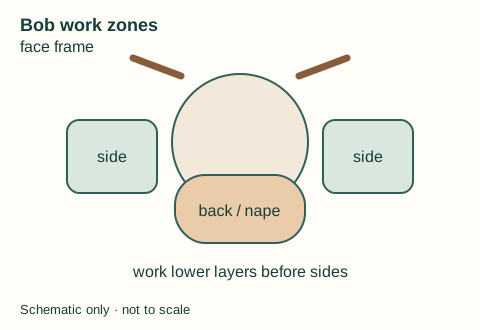
Clip upper layers clear before starting at the back. Work the lower edge in sections that fit the brush width; release each before moving sideways. At the sides, decide whether you want the ends directed under, outward or straighter, and change the brush path accordingly. Save short face-framing layers until you can see and control them. If a front piece skates off a broad barrel, reduce the curve or work a smaller section. A bob does not require one universal diameter, and the general dryer sequence remains the owner of nozzle technique.
Why bobs need deliberate sectioning
The bottom layer determines how the entire cut sits. If it is still damp, flips unpredictably or is pushed in the wrong direction, the top layer cannot hide it. Begin at the nape, work across in narrow horizontal sections, then move upward. It sounds methodical, but it saves time compared with repeatedly reworking the surface.
| Desired result | Brush movement at the ends | Root approach |
|---|---|---|
| Smooth classic bob | Roll ends gently inward | Keep close to the head |
| Softer, fuller bob | Create a light inward bend | Lift crown sections slightly |
| Face-framing movement | Direct front pieces away from the face | Lift only enough to avoid flatness |
| Slight outward flick | Turn brush outward only at the final part of the section | Keep roots controlled |
Step 1: rough-dry and divide the hair
Towel-dry, then remove excess water until the hair is damp rather than dripping. Clip the upper part away and leave a narrow lower section at the nape. If the hair is thick, divide the lower layer into two or three sections from side to side.
Before starting, make sure the brush is clean and free of old hair. A brush coated in lint can snag short layers and makes a bob harder to shape neatly. See how to clean a hairbrush if it needs attention.
Step 2: smooth the lower layers first
Place the round brush beneath the section near the root. Direct the dryer from root to end while moving the brush slowly. As you approach the ends, roll the brush inward a small amount if you want a polished shape. Do not wind the entire section tightly around the barrel; that makes it harder to release and can turn a soft bob into a curl.
Let the section cool for a moment, then unwind the brush. Repeat across the lower layer before dropping the next section.
Step 3: give the crown a little lift
The crown is where a bob can look either deliberate or flat. Take narrow sections around the top and parting. Lift them slightly away from the scalp while drying the root, then guide the length in the direction you want it to fall.
For a softer result, do not lift every section straight upward. Work the visible crown and front first, then let the rest follow. Our guide to getting root volume with a round brush gives the technique in more detail.
Step 4: shape the front pieces last
The face-framing sections are where the direction is most noticeable. For an inward curve, roll them gently toward the face at the ends. For a more open finish, brush them back and slightly away from the face. Keep the dryer following the brush from root to end so the result stays smooth.
If one side behaves differently from the other, that is normal: hair growth patterns and partings are rarely symmetrical. Adjust only the awkward section rather than redoing the whole head.
The most common bob blow-dry problems
Ends flip out unexpectedly. The lower layers may still be damp, or the brush may have been rolled outward without noticing. Re-wet or dampen only the problem section, guide it inward while drying, then let it cool.
The bob looks too round. You may be rolling every section too much. Keep the middle lengths smooth and reserve more obvious brush movement for the ends and the crown.
The crown is flat but the ends look bulky. Separate the two jobs: lift the roots slightly with the brush at the start of the section, then use only a light inward movement at the ends.
The brush catches. The barrel may be too small, the section too wide or the hair too wet. Reduce the section size and consult our round brush size guide before trying a different brush.
A finishing rule worth remembering
Do not immediately brush out every finished section. Let the bob settle, separate it with fingers and assess the shape from all sides. A bob looks best when the ends have direction but still move naturally; over-brushing can erase the work you have done.