Start with the sections you intend to set. A usable roller needs a curve the section can follow, a working surface wide enough for the section and a closure you can secure. Diameter alone says nothing about how many pieces cover your crown or whether short face-framing layers reach the surface. This guide plans individual, unheated rollers; heated appliances require their exact directions.
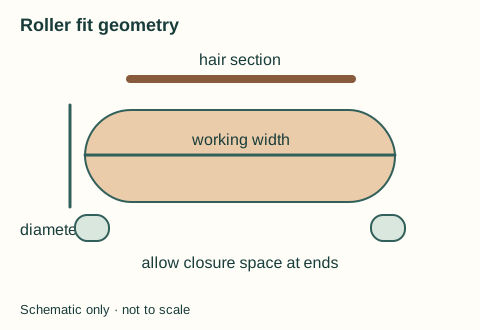
Check curve, width and closure in that order
A short face-framing piece may not travel far enough around a broad cylinder to stay positioned. Test whether its ends reach the holding surface or closure without forcing tension. Longer crown pieces may wrap readily but still need narrower sections if the roller's working width is small. These are geometry checks, not universal hair-length cutoffs or guarantees of curl size. Density changes how many sections are manageable, not the roller diameter by itself.
Table: swipe sideways on a small screen, or focus and use arrow keys.
| Documented unheated example | What the label gives you | What to verify next |
|---|---|---|
| Beauty Works Bouncy Blowout kit | Six 54 mm and six 64 mm self-grip rollers; clips are included. | Working width and whether the stated blow-dry-first method fits your routine. |
| Annie Flex Grip 5/8 inch, six count | A nominal 5/8 inch diameter and snap-style closure. | Working length, closure reach and pieces needed per zone. |
For an actual stated 5/8 inch diameter, exact unit conversion is 15.875 mm. A retail label may round that to a nearby millimetre number; do not silently substitute it for the maker's nominal size. The 54 mm and 64 mm Beauty Works labels are that product's own labels, not interchangeable with a round-brush core measurement.
Coverage worksheet: a hypothetical set
Suppose you plan two face-framing sections, four crown sections and two side sections: eight sections total. If a six-piece pack is your only pack, you cannot place all eight at once without reusing pieces. That is a planning observation, not a prescribed roller count. Write down each intended zone, the number of pieces of each size available, the number of closures and whether a dryer-led preparation stage is required by the exact product. Keep spare closures in mind if the maker supplies separate clips.
If you are choosing between closure systems, use self-grip versus foam snap rollers or bendable rods versus snap rollers. Once a self-grip format is chosen, the self-grip tutorial owns the method. A blow-dry followed by an unheated roller is not an entirely heatless routine. Follow the exact product's starting state and release directions; this geometry worksheet does not set universal dampness, timing, overnight wear or a final curl diameter.
When one pack is enough
Write your section plan on paper before buying more pieces: zone, number of sections, roller size intended, closure needed and whether each piece can be reused within your routine. For a partial crown or face frame, a small pack may be sufficient. For simultaneous coverage of several zones, compare the count in every included size; a mixed pack total does not mean the largest size covers the whole plan. Do not count a separate clip as an extra roller.
If a trial section slips, the cause may be the cylinder curve, working width, closure or the section's preparation. Change one of those at a time so the next purchase addresses the actual problem. A shorter section that fails to complete its wrap calls for a different curve or fastening path; a long but very wide section calls for narrower sections or a wider usable surface. These observations do not prescribe a set duration or guarantee how the finished bend will look.