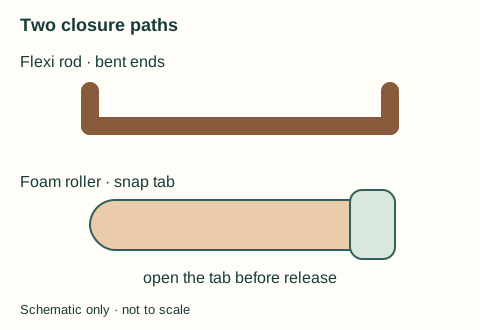
Choose the closure you can secure on a real section. A bend-to-lock rod wraps hair along a flexible length and folds its ends inward. A snap-closure foam roller winds around a cylinder and closes a tab or hinged end over the wrapped section. Both examples here contain soft material; calling this “foam versus non-foam” would obscure the actual decision.
Use exact unheated examples
Table: swipe sideways on a small screen, or focus and use arrow keys.
| Check | Bend-to-lock example | Snap example |
|---|---|---|
| Named item | Annie Soft Twist 9/16 inch, 12 count | Annie Flex Grip 5/8 inch, six count |
| Fastening | Twist or fold the flexible foam rod ends around a wrapped section; no separate clip listed. | Snap the roller closed around a wrapped section; no separate clip listed. |
| Nominal diameter | 9/16 inch | 5/8 inch |
| Pack coverage | 12 rods in this exact pack | Six rollers in this exact pack |
| Working length | Not established numerically on the checked listing | Not established numerically on the checked listing |
These different nominal sizes and counts do not constitute a controlled curl comparison. A flexible rod can have a foam core, as this example does; a snap roller can also have a soft body. Conair Hot Sticks are electrically heated flexible rollers and are excluded from this unheated comparison.
Try one accessible section before buying a full set
Choose a front section you can see and follow the exact item's directions. For a rod, check whether the section fits along the usable length and whether the folded ends stay clear of hair you need to release. For a snap roller, check whether the tab closes without catching ends and can be reached again during removal. Open or unfold the closure first, then unwind along the section path. If the closure is awkward on an easy front section, placing it at the back may be more awkward; that is a handling observation, not a prediction about styling results.
Before buying or storing
Count your intended sections and compare that with the actual pieces per pack. Check usable length, diameter definition, closure integrity and maker care directions. Store a snap without forcing its hinge and a flexible rod without a permanent sharp bend, subject to its instructions. No universal set time, damp-hair permission, overnight comfort or hold duration follows from the format alone. The broader roller-size worksheet helps with pack coverage; self-grip versus foam owns the textured-surface comparison, and the continuous ribbon tutorial concerns a different path.
What to check when a closure fails
A bendable rod that unfolds during the first test may have too much hair against its folded ends, an awkward section direction or a bend that does not stay where you can reach it. A snap that will not close cleanly may be crossing loose ends or a section too broad for the roller. Do not solve either problem by winding harder by default. Remove the piece, reduce the section and repeat the maker's fastening step once. If the same motion remains awkward, the other closure format may suit you better.
Think about removal before you set a hard-to-reach area. A folded rod asks you to find and unfold both ends; a snap asks you to find its tab. This difference is useful at the back of the head where you cannot see the closure. Pack count matters too: six snap rollers may cover selected front sections while 12 rods can address a larger plan, but neither count tells you which diameter or usable length you need. Use the geometry worksheet before buying a second pack.