Short hair rewards control. A hot-air brush that is too large can feel clumsy near the roots and around shorter layers, while a smaller, manageable barrel makes it easier to direct shape where you want it.
Once you have chosen a tool, read our short-hair hot-air brush technique guide for sectioning and barrel control.
Test reach before buying a short-hair brush
Pick the shortest section you actually style: nape, side or face frame. If it cannot lie on a broad head without catching neighbouring hair, a smaller working curve or separate dryer and manual brush may be easier to control. This is a geometry check, not a minimum hair-length rule. The US Revlon Volumizer Plus has a maker-labelled 2.4-inch oval head, while the UK BaByliss 2764U instructions distinguish a 38 mm fixed brush from its larger rotating brush. These fields describe different head formats and should not be treated as interchangeable measured diameters.
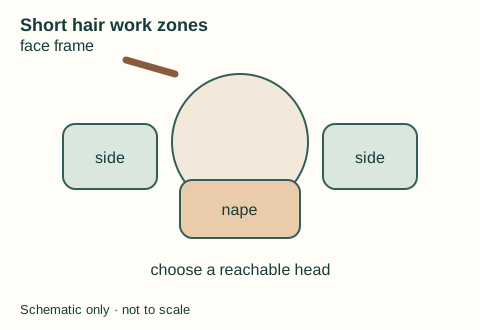
| Short section | Fit test | If it fails |
|---|---|---|
| Nape | Can the head enter below the upper layer? | Clip clear and work a narrower section. |
| Side | Can it travel without catching the back? | Change head width or path. |
| Face frame | Does the piece reach the working curve? | Use a smaller curve rather than forcing a wrap. |
Check the exact appliance's permitted starting state and attachments. Keep an existing dryer and small manual brush if they already reach every section; a powered head is optional.
Start with barrel size
For many short cuts, a smaller round barrel is the practical choice. It can reach nearer the roots and follow the curve of the head more easily. If your hair is closer to shoulder length, a medium barrel may still work well for a smoother result.
Look for a usable tool, not the biggest kit
Large multi-attachment sets can be attractive, but short hair may only need one or two attachments. Prioritize a comfortable handle, straightforward controls and a barrel that does not feel oversized in your hand.
Styling tips
Work with small sections. Begin at the roots, gently lifting hair in the direction you want it to sit, then move through the lengths. Keep heat moderate where possible and use a cool setting to finish if available. A little patience with sectioning usually produces more control than increasing the heat.
If you prefer to dry first and style second, a conventional dryer plus brush may suit you better. See Hot-Air Brush vs Hair Dryer for the trade-offs and How to Use a Hot-Air Brush for a step-by-step routine.
The bottom line
Short hair usually benefits from a smaller, easier-to-control hot-air brush. Buy for manoeuvrability first; extra attachments come second.