A hot-air brush can work very well on short hair because it combines drying and shaping in one tool. The key is to use small sections and a barrel that can reach close to the root without wrapping the hair too tightly. On short hair, a little movement makes a visible difference, so you usually need less rolling and less time than you would on long hair.
The aim is not to wind every section around the brush like a curl. Instead, use the barrel to lift the root, smooth the length and give the ends a deliberate direction.
Run a three-zone short-hair pass
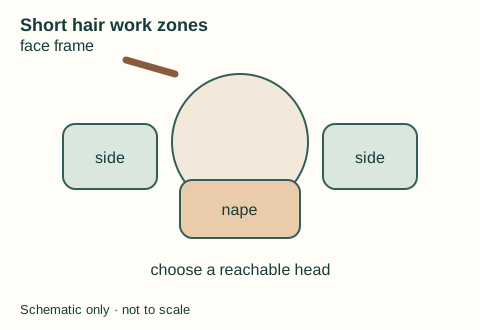
First clip upper pieces clear and test one lower nape section. If the head cannot sit beneath it, narrow the section or use a smaller permitted attachment. Then work each side without drawing hair from the back into the head. Leave the face frame until it is visible; a short piece that cannot reach a broad curve needs a different curve or a simpler directed-air path, not extra rolling. This differs from the long-hair method, where keeping many layers clipped and leaving an open lengthwise release path are central.
The UK BaByliss 2764U booklet distinguishes a 38 mm fixed brush from a 50 mm rotating brush. Those labelled attachments illustrate two different working curves; neither number is a minimum haircut length. Check which attachment, direction and starting state the exact booklet allows.
| Zone | Useful path | Reason to change |
|---|---|---|
| Nape | One narrow lower section at a time. | Head cannot enter beneath clipped hair. |
| Sides | Guide ends away from the finished back section. | Adjacent hair starts wrapping. |
| Face frame | Test reach, then a small controlled bend. | Short piece skates off a broad head. |
Start with the right barrel
Short hair is easier to control with a smaller attachment. A very large barrel can glide over short layers without gripping them, leaving the roots flat and the ends unfinished. A small-to-medium barrel gives you more control around a fringe, crown and nape.
| Short-hair situation | Useful starting barrel | What it helps with |
|---|---|---|
| Pixie or very short layers | Small barrel | Root direction and short fringe |
| Chin-length bob | Small-to-medium barrel | Smoothing and a gentle inward or outward end |
| Longer bob near shoulders | Medium barrel | Softer movement and a broader finish |
The exact diameter varies between brands, so look at the stated measurement rather than judging from product photos. Our round brush size guide explains the same barrel-size principle in more detail.
Prepare the hair first
Begin with towel-dried hair that is damp rather than dripping. If your hair is very wet, remove some moisture first according to the tool’s instructions. Trying to dry a soaked short section with lots of repeated passes can make the process slower and harder to control.
Comb or gently detangle hair before styling. If a section has a knot, loosen it before placing it on the barrel; a hot-air brush should shape a manageable section, not be used to force through tangles.
Work from the lower layers upward
Clip the top portion away if your hair is long enough. Start at the nape with narrow sections, then work upward toward the crown and front. This keeps the lower layers controlled before you style the parts people notice first.
For very short hair, you may not need formal sections everywhere. Even then, work deliberately: one small area at a time is more effective than brushing randomly across the whole head.
Lift first, then smooth
Place the hot-air brush under a section near the root. Lift it gently away from the head and dry that root area briefly while holding the section in the direction you want it to sit. Then move the brush through the length.
For a smooth result, guide the brush from root to end without winding the section tightly around the barrel. For a soft inward bend, turn the brush slightly as you reach the ends. For a more open, face-framing finish, direct the front pieces slightly away from the face.
The most common short-hair mistake is over-rolling. A small barrel can give a lot of shape quickly, so use only as much turn as you need. If the finished section looks too curled, use a gentler pass next time rather than trying to brush the curl flat immediately.
Give the crown special attention
The crown is where short hair can look either lifted and intentional or flat. Use narrow sections there. Place the brush close to the root, lift the hair upward or slightly across its usual direction, then move through the length once the root has begun to dry.
Let the section cool briefly before releasing it. You do not need to create dramatic volume; a small amount of lift often gives short hair a more balanced shape. For a more detailed technique, see how to get root volume with a round brush.
Style fringe and face-framing layers last
Leave fringe and front pieces until the rest of the hair is mostly styled. They are the easiest sections to overwork because they are visible and usually shorter. Use the smallest suitable attachment, start at the root and guide the hair in the direction you want it to fall.
For a side-swept fringe, brush it across the forehead and slightly away at the ends. For a straighter fringe, use less rotation and keep the movement gentle. If a section does not sit right, lightly dampen only that piece and redo it rather than reheating everything.
Common problems
| Problem | Likely cause | Better approach |
|---|---|---|
| The brush will not grip the hair | Barrel is too large or sections are too small to reach it | Try a smaller attachment or work with a slightly fuller section |
| Hair catches around the barrel | Too much hair was rolled too far | Use smaller sections and unwind rather than pulling down |
| Crown stays flat | Root was dried in its natural flat direction | Lift the root upward or slightly across the parting first |
| Ends look too curly | The barrel was rotated too much | Make a gentler finishing turn at the ends |
Hot-air brush or dryer and round brush?
A hot-air brush is convenient when you want a straightforward short-hair finish with one tool. A dryer and separate round brush gives more control if you want to change barrel sizes often or work precisely around very short fringe. Neither approach is automatically better; the useful choice is the one you can handle comfortably and use consistently.
Read hot-air brush versus hair dryer and round brush if you are deciding which setup suits your routine.
Finally, keep the tool clean. Unplug it, let it cool and follow the manufacturer cleaning instructions. Do not immerse an electrical hot-air brush in water. Removing trapped hair regularly helps the attachment work more predictably and makes styling short layers easier.