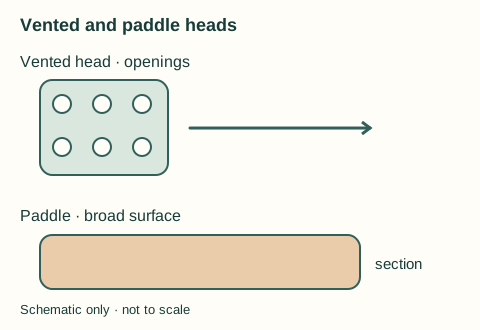
Start with the section path, then check the exact brush's dryer directions. A vented head has openings; a paddle head describes a broad, flatter working shape. These are not opposites: a brush can have openings and a paddle-like outline. The useful choice is whether you want an open, reachable head for a smaller working section or a broad surface to guide longer lengths.
The current UK Denman D200 Skeleton Vent is described by Denman as lightweight, with flexible pins and a blow-drying and root-lift purpose. The UK Denman D83 Gentle Paddle has a larger cushioned working surface, ball-ended pins and a matte handle; Denman specifically lists it for blow-drying hair straight. These maker descriptions support different starting tasks. They do not show that one dries faster, stays cooler or causes less breakage than the other.
Make a practical choice
Table: swipe sideways on a small screen, or focus and use arrow keys.
| Task | Examine first | What to check |
|---|---|---|
| Reach a short section or root area | Open, manageable vented head such as D200 | Can the head sit under the section without catching neighbours? |
| Guide longer lengths in a straighter path | Broad paddle surface such as D83 | Is the working width manageable for your section and grip? |
| Make a distinct end bend | Manual round brush | A cylinder is a different shaping route; see the round/paddle owner. |
Openings do not measure drying speed
The D200's openings leave gaps through the head, while the D83 presents a larger cushioned contact area. From geometry alone, you can reason about where the brush might fit and how much of a section it supports. You cannot infer a timed drying advantage from the openings without a controlled test. Dryer settings, section size, starting moisture and technique also change the task. Use the exact instructions for both the dryer and brush, especially any heat and material limits.
Try the section that is hardest to reach
- Pick one short or root section and one longer section you regularly brush.
- With the dryer off, check whether the head can sit under the section without collecting neighboring hair.
- Repeat with the broadest section you can comfortably guide; divide it if the handle or head feels crowded.
- Only then compare the maker's dryer-use directions for the exact brush.
This two-section check tests fit and control in your hand. It does not test drying speed, heat performance or reduced damage.
Hold a candidate head at the nape, side and root area before deciding. A broad paddle may cover a long length in one guided pass but feel crowded around short pieces. A vented head may enter smaller spaces but require more sections over a long length. Grip comfort matters at the back of the head; the maker's handle descriptions cannot replace a fit check in your hand. If dense hair overwhelms either head, reduce the section before assuming a larger brush is necessary.
Keep each owner focused
For a cylinder that shapes ends, compare round brush versus paddle brush. For everyday detangling, styling and a smaller toolkit, use the general brush guide. A detangling-only brush should not be promoted into a dryer brush merely because it has flexible teeth or a handle. Keep an existing manual brush if it already reaches the required sections and its instructions permit the job.
The two UK Denman listings are examples of documented tasks, not a ranking. Their current page details were checked on 11 October 2026; other colours, markets and generations should be checked separately. If you need a head for both root reach and broad length guidance, test the harder task first and accept that sectioning may do more than buying a second brush.