Choose a corded iron when your usual styling place has a suitable outlet and cord placement is manageable. Consider cordless when cable-free movement is itself useful and you accept a charging stage. Cordless does not mean unlimited operation or that attaching a cable bypasses a depleted battery. If the tool you own works well at your normal station, a different power format may add more routine complexity than value.
For an exact UK comparison, the ghd Gold black 26 mm plate model is a corded straightener, while the original Dyson Corrale Prussian blue/rich copper uses a rechargeable battery. This is the original Corrale, not Corrale CoolShine or another later product. The two irons also differ in plate design and controls, so this page does not claim equal styling performance.
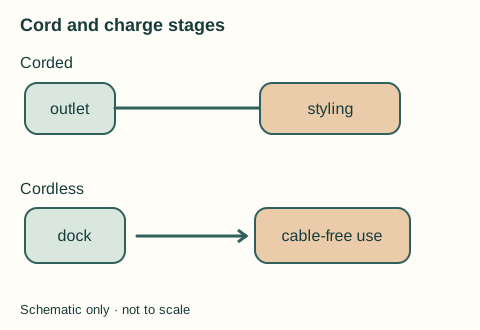
Compare the operating requirements
Table: swipe sideways on a small screen, or focus and use arrow keys.
| Question | Corded Gold, UK | Original Corrale, UK |
|---|---|---|
| Power during styling | Connection to a compatible outlet throughout. | Battery for cordless use; charging and dock management are part of the routine. |
| Published duration | No battery runtime to plan. | Dyson says up to 30 minutes cordless; actual runtime depends on use. |
| Cable attached | Normal operating mode. | Dyson support calls it hybrid charge mode, extending runtime while still using battery power. |
| Space to prepare | Need a safe cord path and resting place. | Need charging space and a place to return the iron between sections. |
Charging is a separate step
For the original Corrale, reserve a place for its dock or magnetic cable, begin with the charge level the manual recommends, and return it between sections if useful. Hybrid charge mode extends the session while still drawing on battery power. For the corded Gold, plan a clear cable route and a permitted resting surface instead. These setup differences matter even if both irons can form a similar intended shape; this comparison does not measure the finished result.
Run the routine before shopping
At a fixed styling station, trace where the cord would travel when you reach the back and sides. If it stays clear and the exact appliance suits your task, cordless freedom may not solve a real problem. If cable placement repeatedly limits hand movement, a cordless iron could be worth considering. The trade-off is a charge cycle, runtime management and a dock or charging cable that still needs an outlet. Compare the exact appliance's weight definition and handling in person where possible; product pages do not establish that a cordless iron feels lighter.
Dyson says the original Corrale's full charge takes 70 minutes and recommends beginning with a full battery. Its support page says attached-cable hybrid mode extends use, while the battery remains involved. This is not an ordinary corded bypass or assume it will operate indefinitely from an empty pack. Read the original Corrale support and manual for exact charging, shutdown and storage steps. The charging input and the iron's operating mode are different fields.
The travel flat-iron guide owns voltage, packing and transport checks. Those checks are separate from this everyday operating decision. Neither corded nor cordless is universally better for travel, and this comparison does not transfer UK electrical or battery permissions to another market.
A purchase makes sense only if the new format answers a specific difficulty in your normal routine. Keep the current iron if its cord, reach and controls already work. If the problem is section handling, compare plate width before changing power formats. The manufacturer specifications are evidence of features, not independent evidence of smoother results or lower damage.