Identify the comb before choosing a method
Look for the maker’s material description and aftercare instructions. Check whether the comb has a coating, join, insert, attached handle or case. A material name alone does not establish soaking, heat or chemical resistance.
Remove loose hair first so you can inspect the teeth. Set aside a comb with a cracked tip, sharp seam, splinter or loose part. Cleaning removes residue; it does not repair the edge that contacts your hair.
A named example that does not start with soaking
Kent’s handmade-comb aftercare describes wiping with a cloth, using a soft toothbrush on the teeth and allowing the comb to dry away from heat and direct sunlight. Those directions do not provide a universal soaking recipe.
Use the aftercare section for the actual product family. Instructions for cleaning the bristles of a wooden hairbrush on the same page are not instructions for washing a comb.
Work from loose debris to the tooth bases
- Remove loose hair. Lift strands away with your fingers, taking care around a pointed tail. Do not drag a metal blade between the teeth.
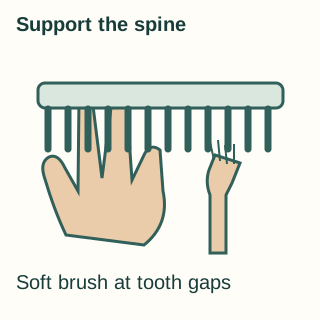
- Support the spine. Hold the comb so a thin tooth is not taking the force of the clean. Use good light to see the spaces at the bases.
- Wipe the accessible surfaces. Use the cloth and moisture level permitted by the maker. Do not add a solvent because a mark looks stubborn.
- Clean between teeth with a permitted soft tool. For a comb whose care allows it, use a soft brush to lift debris from each side. Avoid levering the teeth apart or forcing a tool into a narrow gap.
- Use a wet wash only when permitted. Follow the exact detergent, rinse and drying requirements. Do not boil the comb or put it in a dishwasher as a general household shortcut.
- Dry before closing the case. Follow the product’s drying instructions and check joins and tooth bases. Do not use a hot hair dryer or radiator to speed the process.
- Inspect again. Look for a rough edge or crack revealed when residue is gone. Stop using a damaged comb rather than sanding or reshaping a tooth without manufacturer guidance.
Match the question to the material
Table: swipe sideways on a small screen, or focus and use arrow keys.
| Construction | Check before cleaning |
|---|---|
| One-piece plastic or hard-rubber comb | Exact permitted cleaner, water exposure and heat restrictions. |
| Wood or natural-material comb | Whether water is allowed at all and whether any finish needs specific care. |
| Metal comb or metal tail | Coatings, joins and the maker’s cleaning instructions; appearance alone does not prove corrosion resistance. |
| Comb with attached handle or insert | Whether the join can be wetted and how it should be dried. |
| Comb stored in a case | The case’s own cleaning instructions and whether it is dry before the comb returns. |
Ordinary cleaning is not disinfection
This page covers personal household care. It does not provide a salon disinfection protocol or claim that wiping removes every microorganism. If a professional or shared-use setting requires a specific hygiene process, use the applicable requirements and a method compatible with the exact tool.
For a brush with pins, bristles or a cushion, use how to clean a hair brush. If a cleaned comb still catches, read when to replace a hairbrush or comb before returning it to the routine.