Quick answer
Read each product's stated finish, hold, starting hair and preparation method. Choose the directions that fit your intended shape and routine. Paste does not automatically mean more shine, and clay does not automatically mean matte; the exact examples below show why both assumptions need checking.
Separate the product name from the desired finish
Describe whether you want loose definition, grouped pieces or a more deliberately arranged outline. Then record the visible finish you prefer as a separate field. Low shine, matte and medium shine are maker descriptions to inspect, not calibrated values proving how a product will look on your own hair.
Hold is another field. A high-hold label does not explain whether the product spreads in the way you want or how it permits later rearranging. Do not reduce several decisions to a single best-for-your-hair-type answer when the available evidence describes instructions rather than measured outcomes.
Read two examples without building a universal scale
Table: swipe sideways on a small screen, or focus and use arrow keys.
| Named US maker example | Maker's stated finish and hold | Stated application state |
|---|---|---|
| American Crew Defining Paste | Medium hold and low shine | Damp or dry hair |
| American Crew Molding Clay | High hold and medium shine | Towel-dried hair |
The Defining Paste page and Molding Clay page establish those named descriptions and directions. Their difference is useful precisely because it does not fit a clay-is-always-matte rule. It does not establish that every paste is more flexible or every clay has stronger hold.
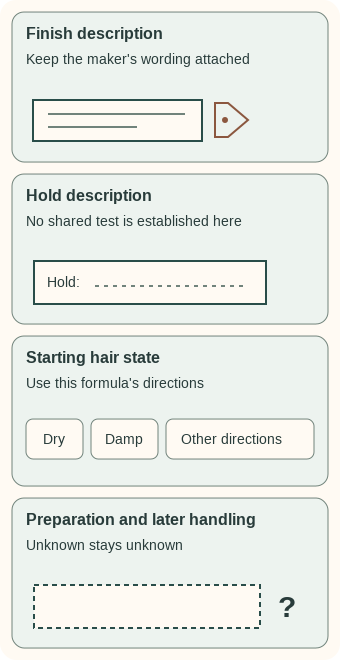
Compare the preparation you will actually repeat
Think about when you normally arrange your hair. If that stage is after it is dry, check that the selected formula permits dry application. If another product begins with towel-dried hair, decide whether you want to move the styling step to that state rather than pretending the difference is just the jar's name.
Read hand preparation as well. A maker's instruction to prepare a small portion between palms or fingertips does not authorise external heating, dilution or physically mixing it with another styling product. Keep any missing removal or later-handling information visible until the container or maker answers it.
Compare one change against the current routine
If you already use a styling product for the same shape, compare the alternative as a replacement first. Choose a similar intended outline on separate suitable sessions, follow each formula's own instructions and record where you applied it. Identical-looking scoops do not create an equal-dose trial.
Describe the handling you actually observe: the portion reached the intended area, a first contact left most of it in one place, or the outline was harder to arrange than expected. Describe the resulting appearance separately. Those notes can guide your next use without claiming that the product name explains the result for everyone.
Keep composition separate from appearance
Two names can overlap in composition and still have different directions. Conversely, similar finish descriptions do not establish identical formulations. A visible residue, a heavy feel or an uneven application is not enough to assign the cause to clay, wax, oil or a particular ingredient.
Use the current ingredient list for the exact product when that information matters to you. The list does not certify compatibility between formulas or turn a marketing finish into a material analysis.
Continue with the selected application method
Use paste application or clay application to plan coverage and shaping for the selected jar. If the real choice is against a pomade, pomade versus clay retains that separate comparison.
Before combining products, give each one a different job and check the relevant directions. Product-order guidance explains why moving a jar earlier or later cannot itself establish compatibility. Retaining a working product is a valid outcome when a different label does not solve a defined problem.