Choose the UK Rise if your intended dry-stage motion follows a round barrel; consider the current UK Glide+ if you want a broader paddle pass through already-dry sections. Both are powered hot brushes for dry hair, so neither is a substitute for a permitted drying step after washing. If your existing brush already handles the shape you want, a second hot brush may add little.
This is a comparison of the UK ghd Rise round volumising hot brush and the new UK ghd Glide+ standard paddle hot brush, as listed on 11 October 2026. It does not cover the earlier Glide, Glide+ Max or a US variant. The current Glide+ listing calls out an improved stepped dual-bristle arrangement. The Rise listing describes a round heated barrel with nylon bristles and a soft stand. Those are meaningful shape and handling differences, not evidence of a measured advantage on your hair.
What the exact UK listings support
Table: swipe sideways on a small screen, or focus and use arrow keys.
| Decision field | Rise, UK | Glide+, UK |
|---|---|---|
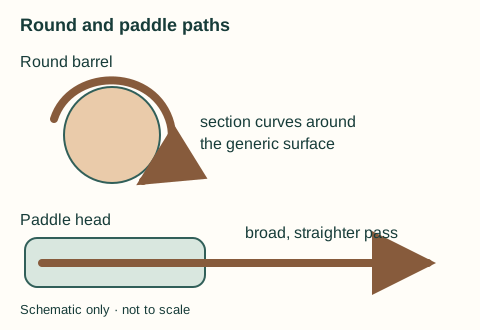
| Working shape | Round heated barrel with bristles; the section can follow a curve. | Paddle head with stepped bristles; the pass is broader and flatter. |
| Starting state | Maker says to style dry hair. | Maker says to use on dry hair. |
| Published inactivity shutoff | 30 minutes on the exact Rise listing. | 60 minutes on the current Glide+ listing. |
| UK cable and warranty | 2.7 m swivel cord; check the exact sales listing for warranty terms. | 2.7 m cable and two-year warranty on the current listing. |
Match the movement to the job
A round head is easier to place beneath a narrow section when the intended path includes a bend or a lifted root. That is a geometric reason to examine Rise, not a promise of more volume. A paddle head covers a wider, flatter path through already-dry lengths. It may be more natural for someone whose main task is guiding the lengths rather than turning an end around a cylinder. Glide+ Max has a different head and should be checked as a separate product if broad coverage is the main reason for shopping.
First try the smallest representative section you actually style. If the section cannot reach or release from a round head comfortably, change the section or format rather than forcing repeated wraps. If a paddle head does not give the curve you want, do not assume more passes will turn it into a round brush. A manual round brush with a separate dryer is another route for damp-stage shaping; compare that mechanism in thermal brush versus hot-air brush.
Consider the rest of the routine
Both exact UK tools belong after drying. If you already own a dryer, it can cover that earlier stage. A dry-use heated brush can then be an optional finishing tool; the routine builder treats it as owned dry-stage equipment. An airflow brush is a different appliance category with its own starting-state directions, and neither hot-brush product page grants wet-hair drying permission.
Choose neither if a working tool already covers your task, or if the task is predominantly washing-day drying. Read the exact manual, current package and use directions before buying; product-page language such as “smooth in one stroke” is the maker's marketing claim, not this site's test result. The comparison above keeps the current UK Glide+ separate from older Glide support pages, which may describe a different generation.